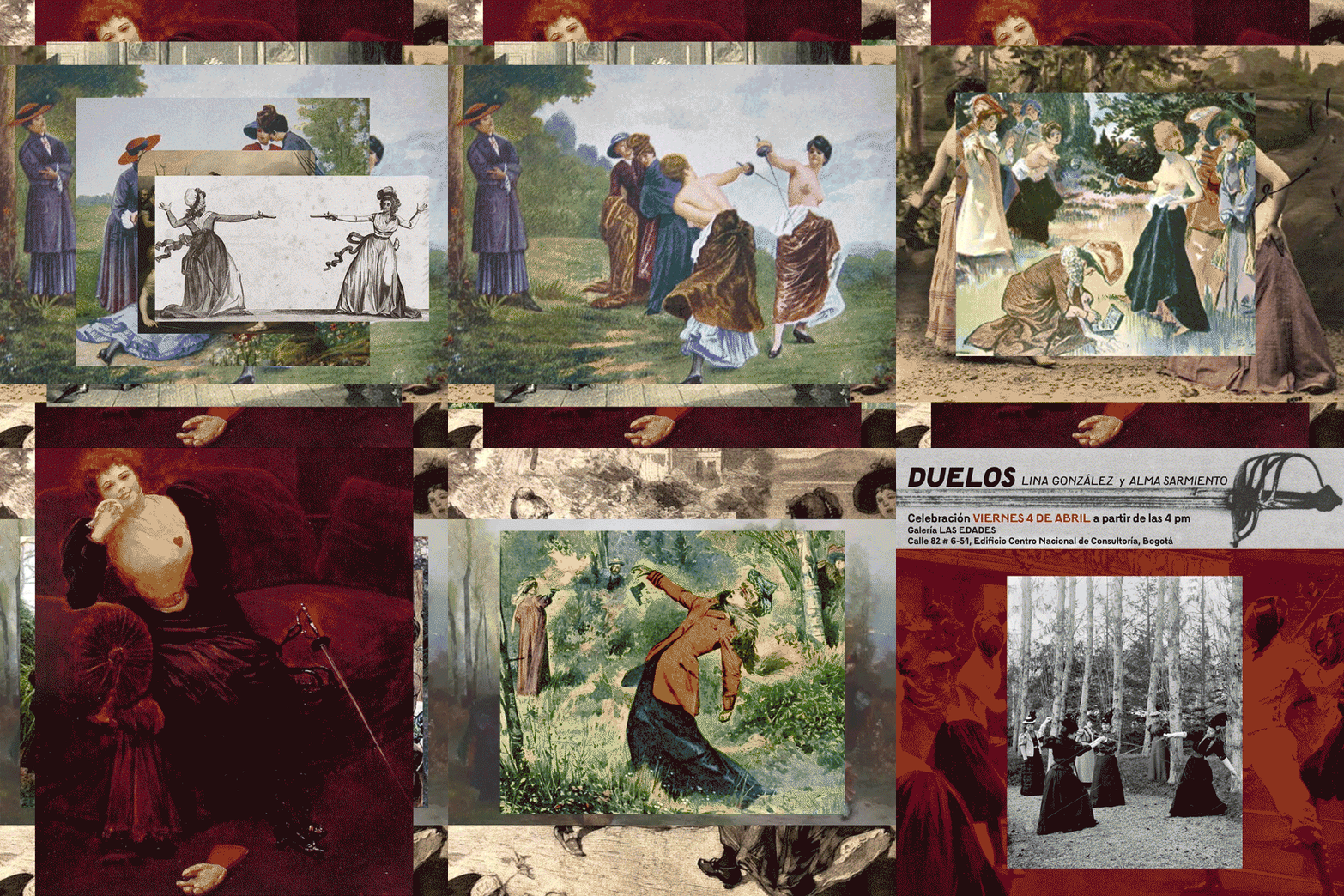
Duelos
Un proyecto de Lina González y Alma Sarmiento
Exposición en GALERÍA LAS EDADES
Calle 82 # 6-51. Bogotá
Edificio Centro Nacional de Consultoría
7 marzo - 12 abril 2025
Entre febrero de 2024 y enero de 2025, Lina González y Alma Sarmiento crearon un combate de conversación a través de obras artísticas que se enviaron por correo o se entregaron en persona, aproximadamente cada mes.
A lo largo de esta conversación, de la que resultaron 21 obras, el lenguaje del arte se apropió del ritual-arte del duelo. En estos territorios del honor, el combate plástico carburó la programación de un espectáculo singular y despuntaron obras gestadas en las ceremonias del secreto y del silencio.
Varias de las misivas plásticas creadas durante este duelo se enviaron con textos que funcionaron luego como fichas técnicas para algunas de las obras. La provocación y el reto del duelo partió de una conversación sobre la película El caballo de Turín de Béla Tarr y Agnes Hranitzky de 2011. De ahí surgió una deriva multidimensional que atravesó, recorrió y sacudió las obsesiones de cada artista, donde se cruzan el collage, la escultura, el tiempo, los burros, los pájaros, el bordado, el video y algunas especulaciones sobre teorías económicas, entre otras.
Retar a un duelo implica que algo del honor se ha visto afectado. ¿Es el arte una posible arma de combate?
¿Aún existe el honor?
Duels
A project by Lina González and Alma Sarmiento
Exhibition at GALERÍA LAS EDADES
Calle 82 # 6-51. Bogotá
Edificio Centro Nacional de Consultoría
7 march - 12 april 2025
Between February 2024 and January 2025, Lina González and Alma Sarmiento engaged in a conversational duel through artworks exchanged by mail or delivered in person, roughly once a month.
Over the course of this exchange—which produced 21 works—the language of art took on the ritual form of the duel. Within these territories of honor, this visual combat fueled the staging of a singular spectacle, giving rise to works conceived in the ceremonies of secrecy and silence.
Several of the visual missives created during this duel were accompanied by texts that later served as technical data sheets for some of the pieces. The provocation and challenge of the duel stemmed from a conversation about The Turin Horse (2011) by Béla Tarr and Ágnes Hranitzky. From there, a multidimensional drift unfolded—one that traversed, revisited, and unsettled each artist’s obsessions, where collage, sculpture, time, donkeys, birds, embroidery, video, and even speculations on economic theories converged.
To challenge someone to a duel implies that something of honor has been disturbed. Is art a possible weapon in such combat?
Does honor still exist?
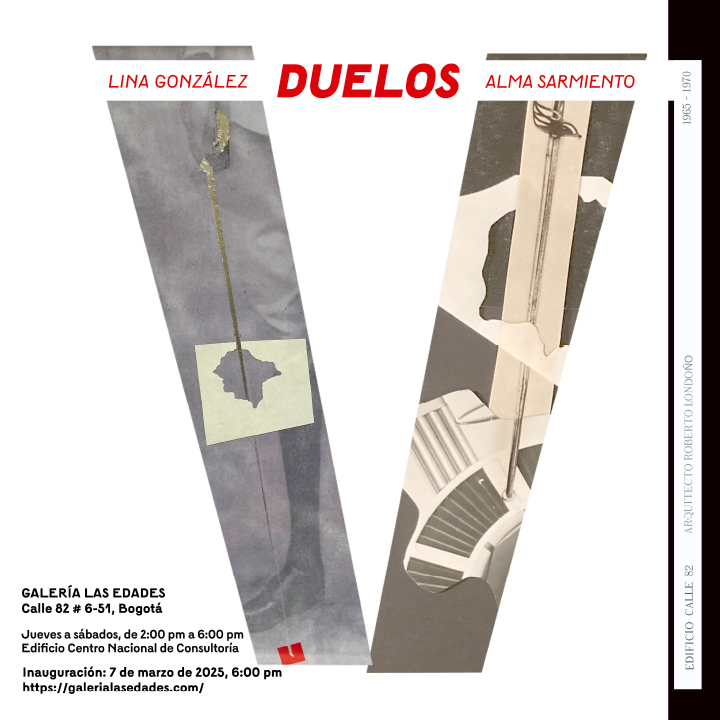
Invitación a la exposición.
Exhibition flyer.
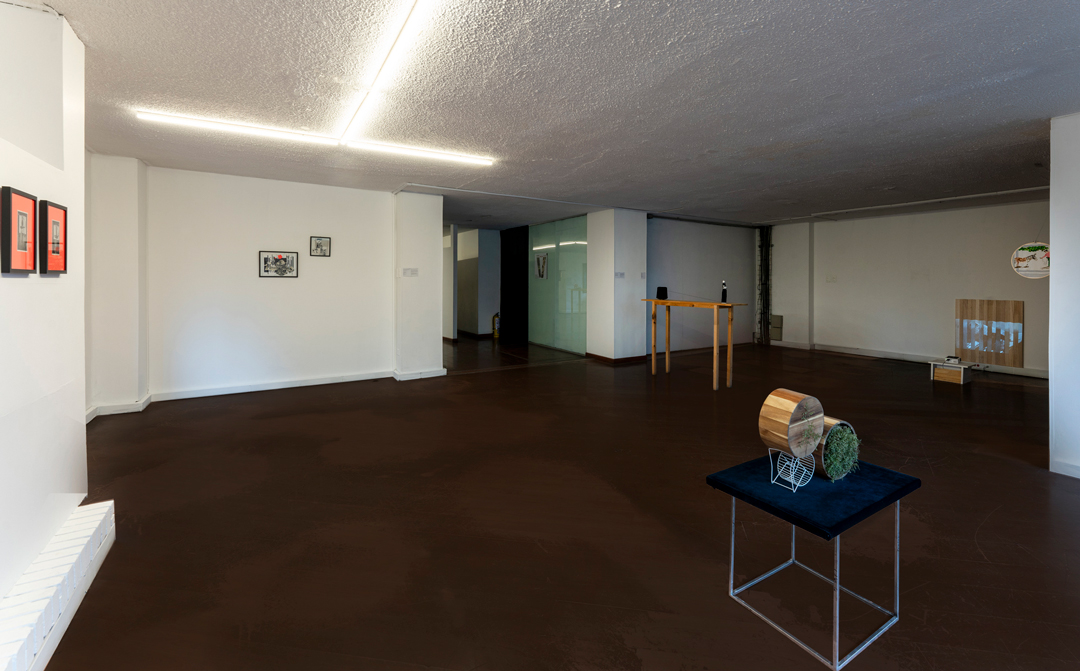
Vista general de la exposición. Sala 1. Fotos por: Mateo Pérez.
General view of the exhibition. Room 1. Photographs by: Mateo Pérez.
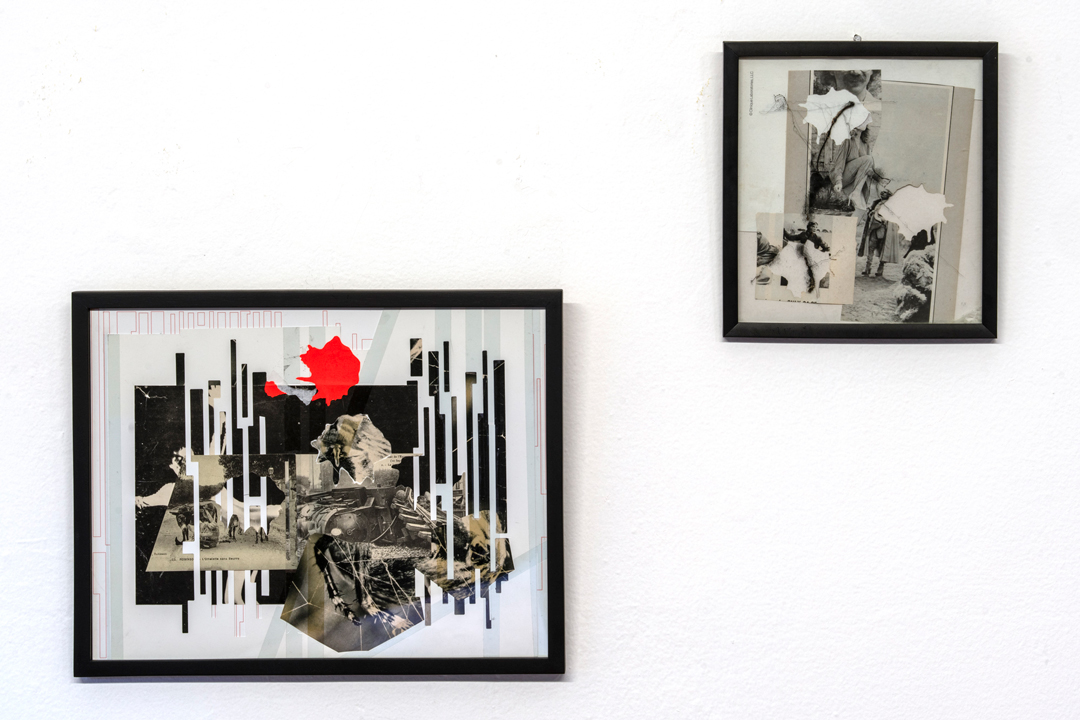
Alma Sarmiento (izq.),Terca como una mula. Collage sobre papel. 2024.
Lina González (der.) El lujo del Honor.
Collage sobre papel, tela de araña y huecos sobre papel hechos por un insecto desconocido. 2024.
Alma Sarmiento (left). Stubborn as a mule. Collage on paper. 2024.
Lina González (right).
The Luxury of Honor. Collage on paper, spiderweb, and holes on paper made by an unknown insect. 2024.
7 de febrero 2024
Entonces llegó a nosotras esa noche, en la sobremesa El Caballo de Turín*. El caballo de Turín, nos hizo recordar al caballo que enmudeció a Nietzsche, entonces la reté. Aceptó.
Disparo hoy en blanco y negro.
“El lujo del Honor”.
Un bigote poblado,
un caballero con peluca,
una piloto y un pastel.
Prejuicios,
orificios sobre los oficios,
el trabajo y el placer.
lina
*El caballo de Turín, 2011. Béla Tarr y Agnes Hranitzky.
February 7 2024
That night, over dinner, The Turin Horse* came to us.
The Turin Horse reminded us of the horse that silenced Nietzsche—so I challenged you. You accepted.
I shoot today in black and white.
“The Luxury of Honor.”
A thick mustache,
a gentleman in a wig,
a pilot and a cake.
Prejudices,
holes over crafts,
work and pleasure.
lina
*The Turin Horse, 2011. Béla Tarr y Agnes Hranitzky.
14 de marzo 2024
Lina,
Su proyectil le dio a la mujer que cayó del burro. Cae, se hace la muerta. Y se volvió aviadora o conductora de tren, o ambas.
“El 3 de enero de 1889, Friedrich Nietzsche sale de su casa del nº6 de la Vía Carlo Alberto en Turín. Tal vez sale a pasear o recogerá su correo en la oficina del correo. No muy lejos de él […], un cochero tiene problemas con su caballo, terco como una mula. Por más que el hombre insiste, el caballo no se mueve […].”
El afán del caballo de Turín consiste en fundar la impaciencia en el cochero.
La terquedad de la mula, del burro, abre una línea, de honor, un camino para iniciar la posibilidad de un 'carnaval del tiempo' (que es una frase de Nietzsche).
Vencer la oligarquía del tiempo y abrir 'el reparto de lo visible entre las criaturas'.
Lanzo el segundo proyectil de nuestros duelos: Terca como una mula.
Alma
March 14, 2024
Lina,
Your projectile hit the woman who fell off the donkey. She falls, plays dead. Then she became an aviator or a train conductor—or both.
“On January 3, 1889, Friedrich Nietzsche leaves his home at No. 6 Via Carlo Alberto in Turin. Perhaps he is going for a walk or to collect his mail at the post office. Not far from him […], a coachman is having trouble with his horse, stubborn as a mule. No matter how much the man insists, the horse will not move […].”
The urgency of the Turin horse lies in founding impatience within the coachman.
The stubbornness of the mule, of the donkey, opens a line—of honor—a path toward the possibility of a ‘carnival of time’ (as Nietzsche called it).
To defeat the oligarchy of time and open ‘the sharing of the visible among creatures.’
I launch the second projectile of our duels: Stubborn as a mule.
Alma
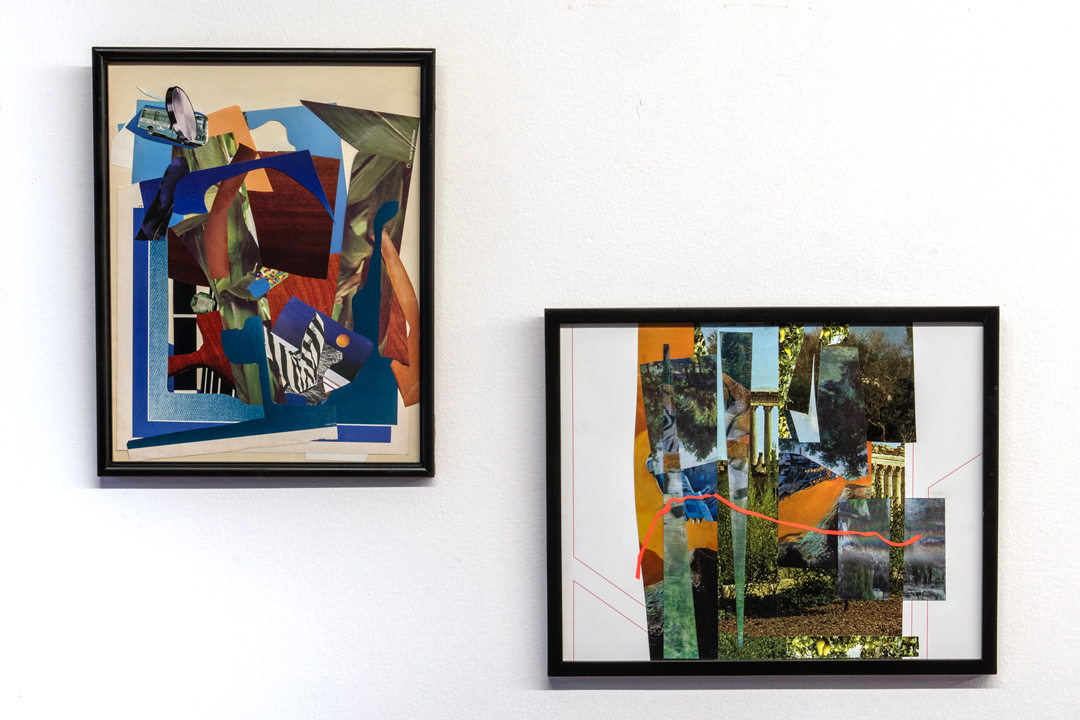
Lina González (izq.), Desorden. Collage pegado con la presión del vidrio. 2024.
Alma Sarmiento (der.), El afar y el azán. Collage sobre papel. 2024.
Lina González (left). Disorder. Collage pressed under glass. 2024.
Alma Sarmiento (right). Urge and Chance.
Collage on paper. 2024.
April 25, 2024
Recibo su bala en un tobillo.
“Terco como una mula”,
duele. ¿Quién es mula?
Un cruce de caballo y burra.
La mula es mula y cuando no patea, recula*.
Ventanas rectas
cintas perfectas, fijas.
Estoy de un solo pie, y disparo.
Llamo al “Desorden”,
de esa línea recta negra
a la curva cebra,
del caballo al burro,
del burro a la mula,
de la mula a la estética
de aquél que circula.
lina
*Plinio.
April 25, 2024
I take your bullet in the ankle.
“Stubborn as a mule,”
it hurts. Who is the mule?
A cross between a horse and a she-ass.
The mule is a mule—and when it doesn’t kick, it backs up.*
Straight windows,
perfect, fixed ribbons.
I stand on one foot, and I fire.
I call upon “Disorder,”
from that straight black line
to the zebra’s curve,
from horse to donkey,
from donkey to mule,
from mule to the aesthetics
of the one who moves.
lina
*Pliny.
18 de mayo 2024
De caballo a burro, a cebra y a hámster disfrazado, y del tren al bus y del bus a una nave espacial incrustada en ruinas y paisajes lenticulares. Las líneas verticales disfrazadas de tiempo y espacio comprimidos.
Falsa continuidad y homogeneidad del tiempo moderno.
En el terco tiempo, como el de la mula, ¿qué relación tendría el afán con el azar?
El afán como un chiste del azar (el collage también).
El collage, el azar y el afán. De mi disfaro salen El afar y el azán.
Alma
May 18, 2024
From horse to donkey, to zebra, to a disguised hamster—and from train to bus, and from bus to a spaceship embedded in ruins and lenticular landscapes.
Vertical lines disguised as compressed time and space.
The false continuity and homogeneity of modern time.
In stubborn time, like that of the mule, what relation might urgency have with chance?
Urgency as a joke played by chance (as collage is too).
Collage, chance, and urgency. From my misfire come Urge and Chance.
Alma
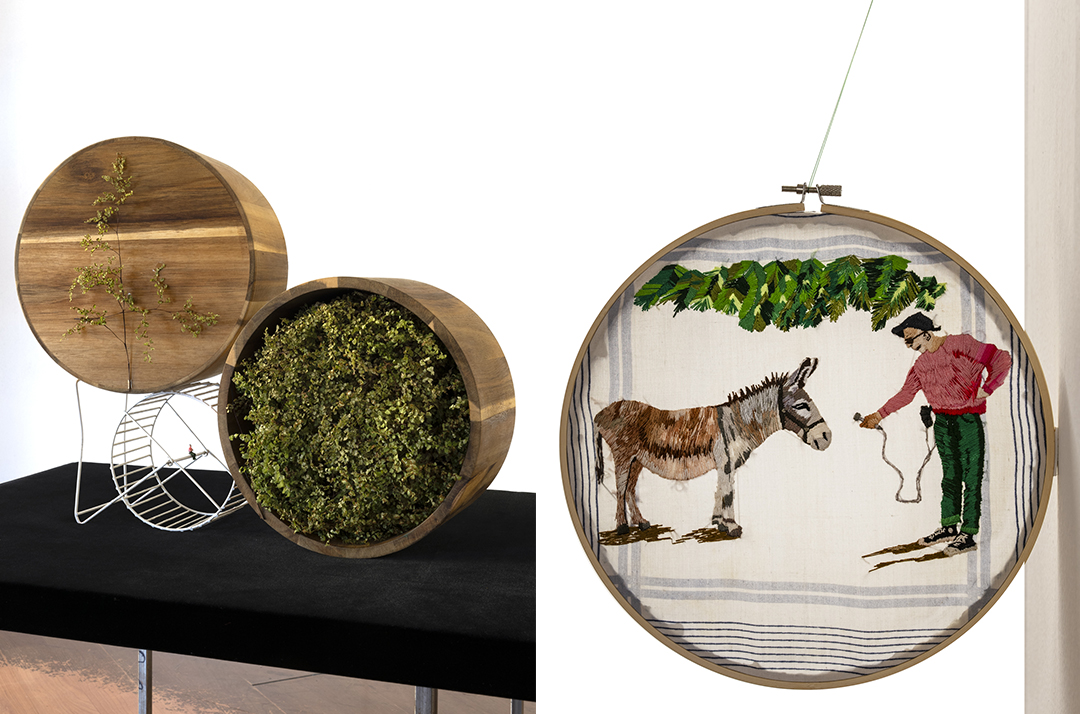
Lina González (izq.), ¿el mundo es redondo, o es solo Macondo? Escultura, ensamblaje, técnicas mixtas. 2024.
Alma Sarmiento (der.), A / como Artistas, 2024. Bordado sobre pañuelo, montado en tambor de 27 cm de diámetro.
Lina González (left).Is the world round, or is it just Macondo? Sculpture, assemblage, mixed media. 2024.
Alma Sarmiento (right). A / as in Artists., 2024 Embroidery on handkerchief, mounted on a 27 cm diameter hoop.
30 de mayo 2024
Su tiro en mi codo, roza el cubital
la risa llora sin capital.
Se sale con efecto usted del plano
y sobre todos camina un gusano.
Mi bala disparó extrayendo el plano
y sembrando el paisaje en curioso engranaje.
“¿el mundo es redondo, o es solo Macondo?”
Trabajo o descanso,
la rueda del tiempo,
madera y bagazo.
lina
May 30, 2024
Your shot to my elbow grazes the ulnar—
laughter weeps, stripped of capital.
You slip off the plane with flair,
and over everyone a worm walks.
My bullet fired, extracting the plane
and planting the landscape in a curious gear.
“Is the world round, or is it just Macondo?”
Work or rest,
the wheel of time,
wood and husk.
lina
29 de junio 2024
Quien gira mira. Por el rabillo de la aguja pasa mi bala desenhebrada dibujando la lentitud.
El lujo de bordar.
« A / como Artistas
¿Bruto como un pintor?
¿Se puede pintar con un pincel amarrado en la punta de la cola? El famoso cuadro Puesta de sol sobre el Adriático, expuesto en el Salón de los Independientes en 1910, ofrece una respuesta a esta pregunta. Es obra de Joachim-Raphaël Boronali y fue su única pintura. En realidad, Boronali se llamaba Lolo. Era un burro».
Vinciane Despret, Que diraient les animaux, si… on leur posait les bonnes
questions ? Éditions La Découverte, Paris, 2012, p. 9.
« El 8 de marzo de 1910, Roland Dorgelès tomó prestado a Lolo, el burro de Frédéric Gérard, conocido como “el padre Frédé”, propietario del cabaret Lapin Agile en Montmartre. En presencia de un notario, el maestro Brionne, Dorgelès hizo que Lolo pintara un cuadro con un pincel atado a su cola. Cada vez que le daban una zanahoria, el burro movía la cola frenéticamente, aplicando así la pintura sobre el lienzo».
Wikipedia: Et le soleil s'endormit sur l'Adriatique
Alma
June 29, 2024
“A / as in Artists
Brute as a painter?
Can one paint with a brush tied to the tip of a tail? The famous painting Sunset over the Adriatic, exhibited at the Salon des Indépendants in 1910, offers an answer to this question. It is the work of Joachim-Raphaël Boronali and was his only painting. In reality, Boronali’s name was Lolo. He was a donkey.”
Vinciane Despret, Que diraient les animaux, si… on leur posait les bonnes questions ? Éditions La Découverte, Paris, 2012, p. 9.
“On March 8, 1910, Roland Dorgelès borrowed Lolo, the donkey belonging to Frédéric Gérard, known as ‘Father Frédé,’ owner of the Lapin Agile cabaret in Montmartre. In the presence of a notary, Maître Brionne, Dorgelès had Lolo paint a picture with a brush tied to his tail. Each time he was given a carrot, the donkey wagged his tail frenetically, thus applying the paint to the canvas.”
Wikipedia: Et le soleil s'endormit sur l'Adriatique
Alma
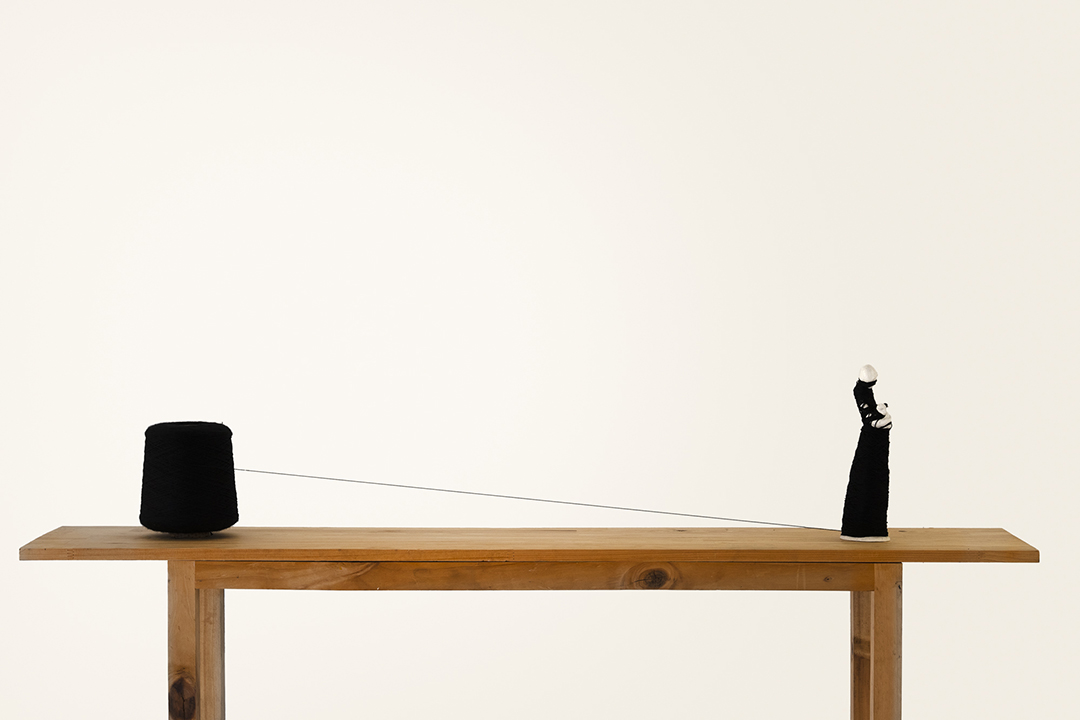
Lina González. Mujer blan-cura. Escultura, hilo, técnicas mixtas. 2024.
Lina González. White-cure Woman. Sculpture, thread, mixed media. 2024.
10 de julio 2024
Su tambor retoma al burro que adora
La bala es perdida rebota y me mira.
Reconozco al hombre y su compañía,
el burro qué opina, quién hace el bordado.
Perdí mi pistola, el azar me toma,
sopeso los hilos, cargados de estilos
madeja, volumen, la “Mujer blan-cura”.
Y una sola oreja que el borrego coteja.
lina
July 10, 2024
Your drum returns to the donkey you adore.
The bullet is lost—it ricochets and looks at me.
I recognize the man and his companion:
the donkey—what does it think? who does the embroidery?
I lost my pistol—chance takes hold of me.
I weigh the threads, heavy with styles:
skein, volume, the “White-cure Woman."
And a single ear that the lamb compares.
lina
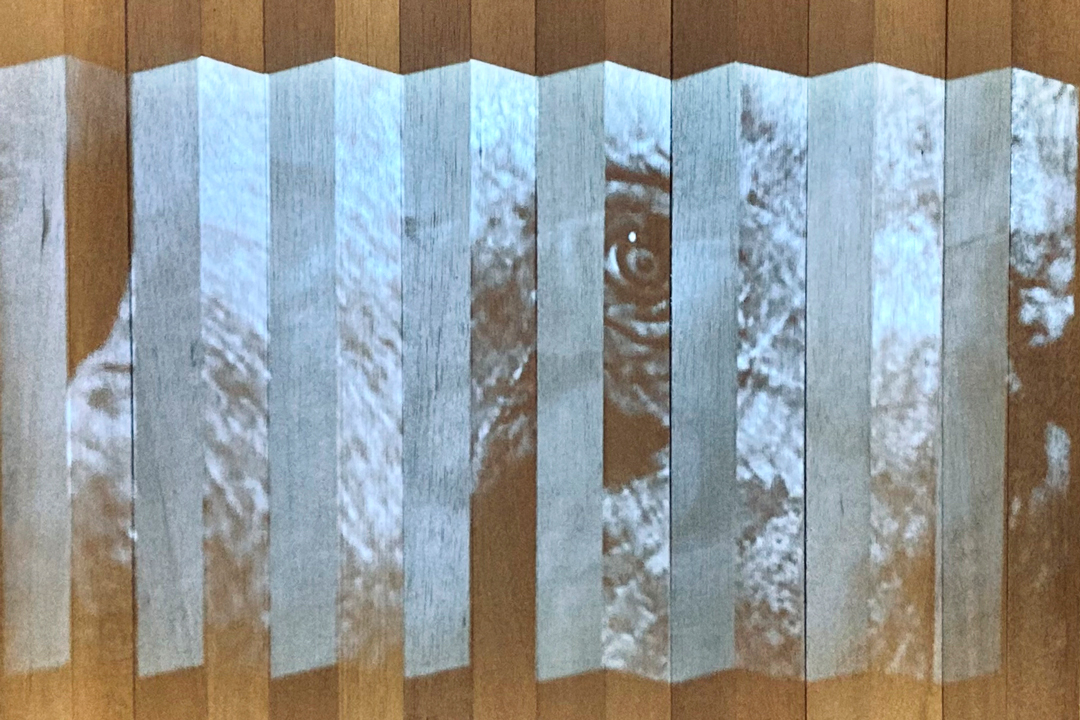
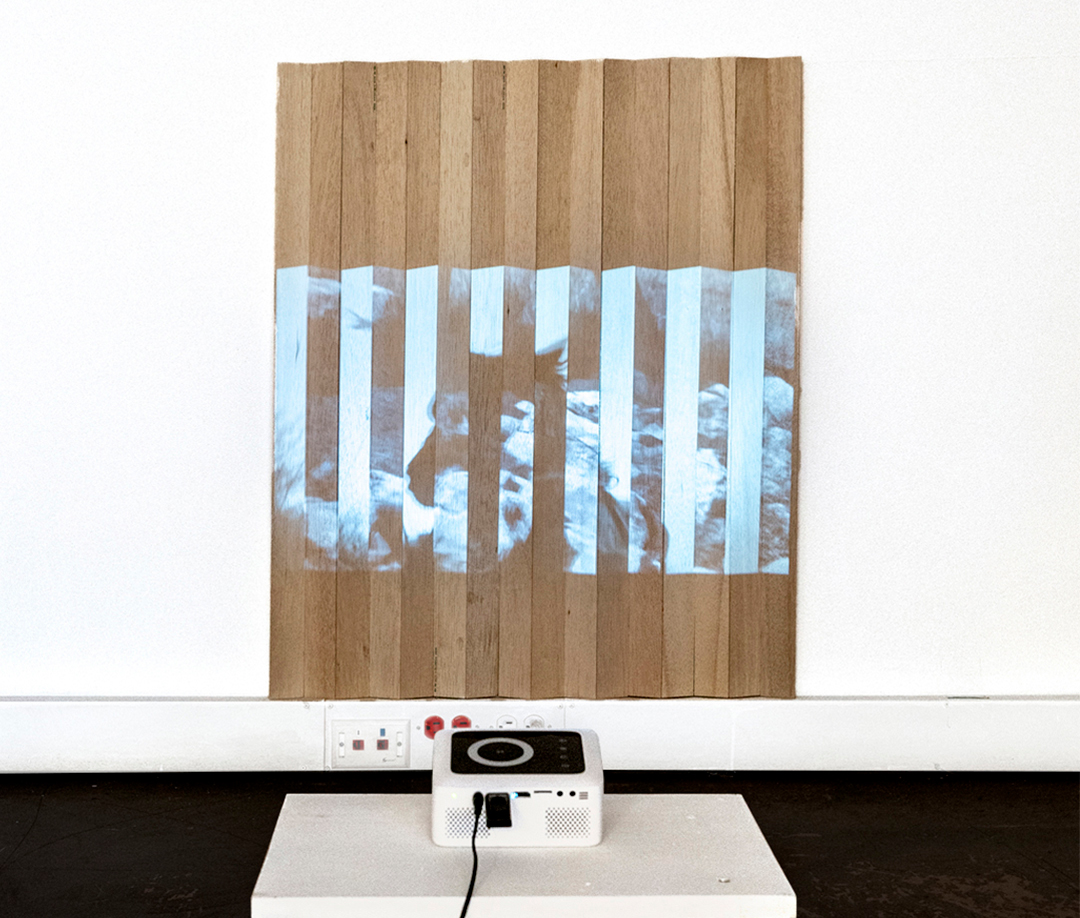
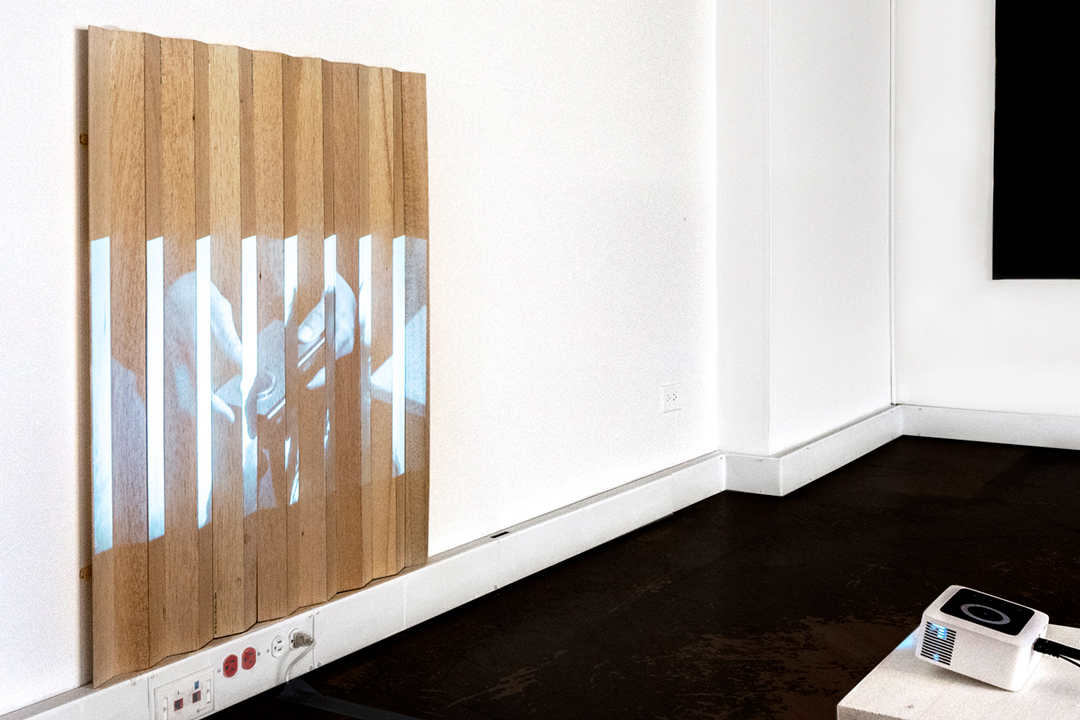
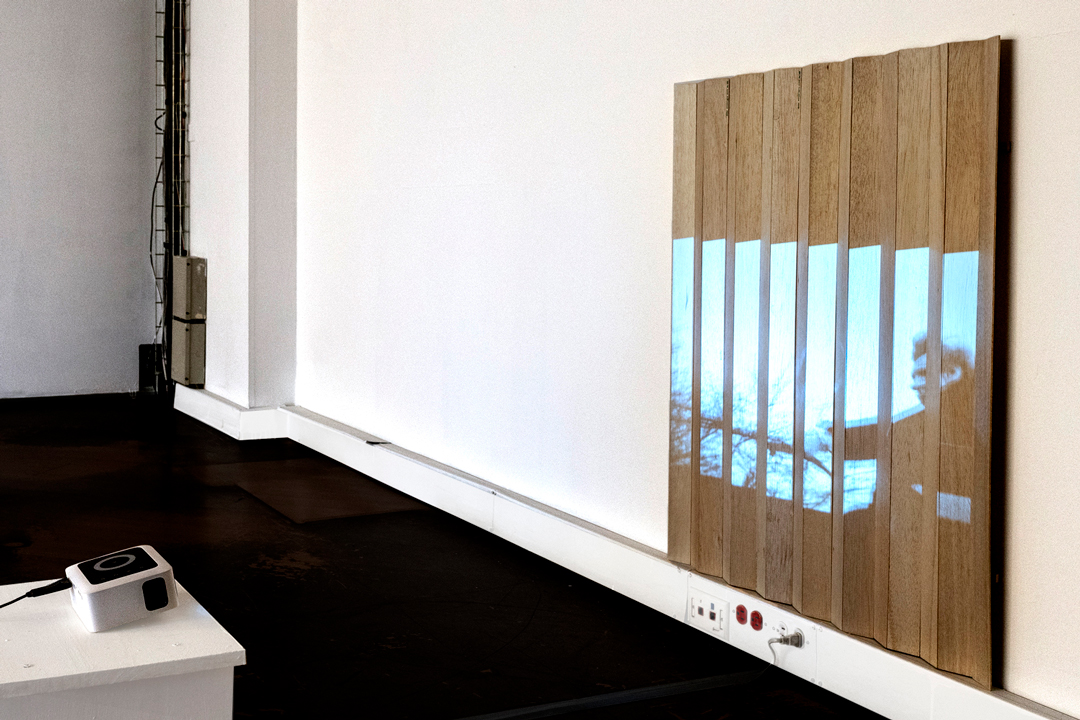
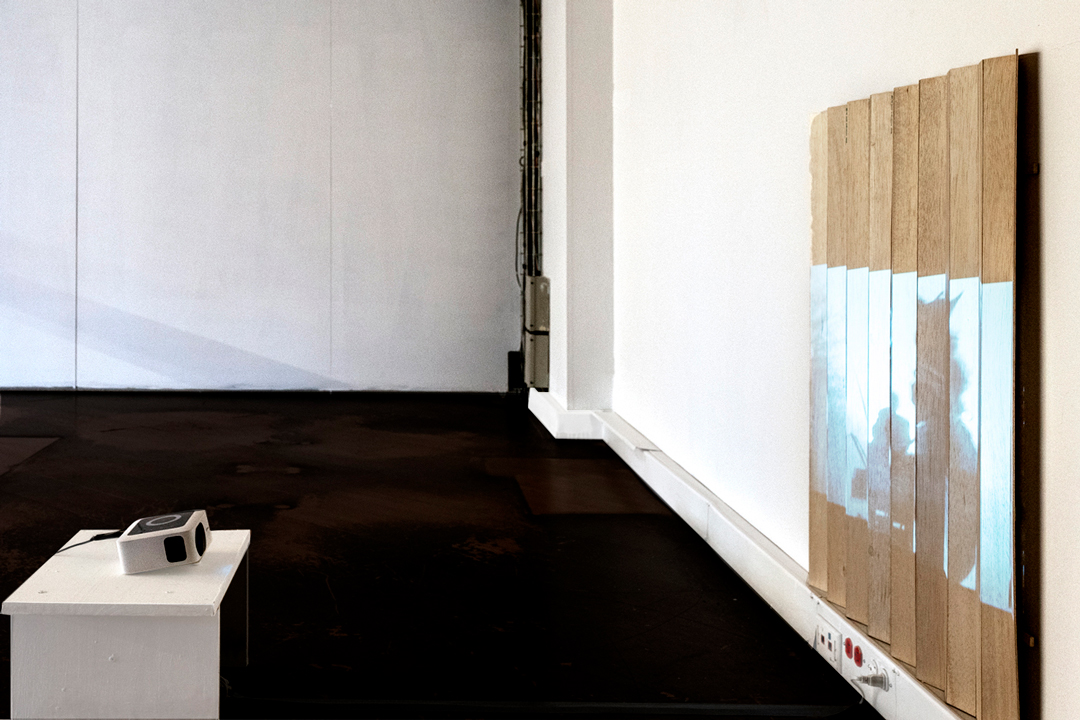
Alma Sarmiento. Del Caballo de Turín Al azar de Baltasar. Video collage “lenticular”, proyectado sobre pantalla en acordeón. 11 min. 08 seg. 2025.
Alma Sarmiento. From The Turin Horse to Balthazar, at Random. “Lenticular” video collage, projected onto an accordion screen. 11 min 08 sec. 2025
1 de agosto 2024
Lina,
«Es también, Al azar de Baltasar, dos líneas que se encuentran, que son paralelas en un momento dado y luego al contrario que se cruzan. La primera línea es: en la vida de un asno, encontramos las mismas etapas que en la vida de un hombre, la infancia, las caricias, la edad madura, ya sea hombre o asno, el trabajo, el talento, el genio, un poco más tarde, y finalmente el período místico que precede a la muerte. La otra línea es: el asno pasa por las manos de diferentes amos que representan los vicios y sufre y muere a causa de ellos […]».
Au hasard Baltasar.
Mi espada queda suspendida, desafiando a la ley de la trenedad. Toda relación de poder es una relación de tiempo.
Del Caballo de Turín Al azar de Baltasar.
Alma
August 1, 2024
Lina,
“It is also, Au hasard Balthazar, two lines that meet—at one point parallel, and later, on the contrary, crossing. The first line is: in the life of a donkey we find the same stages as in the life of a man—childhood, affection, maturity, whether man or donkey, work, talent, genius a little later, and finally the mystical period that precedes death. The other line is: the donkey passes through the hands of different masters who represent the vices, and he suffers and dies because of them […]”
Au hasard Baltasar.
My sword remains suspended, defying the law of trainess. Every relation of power is a relation of time.
From The Turin Horse to Balthazar, at Random
Alma
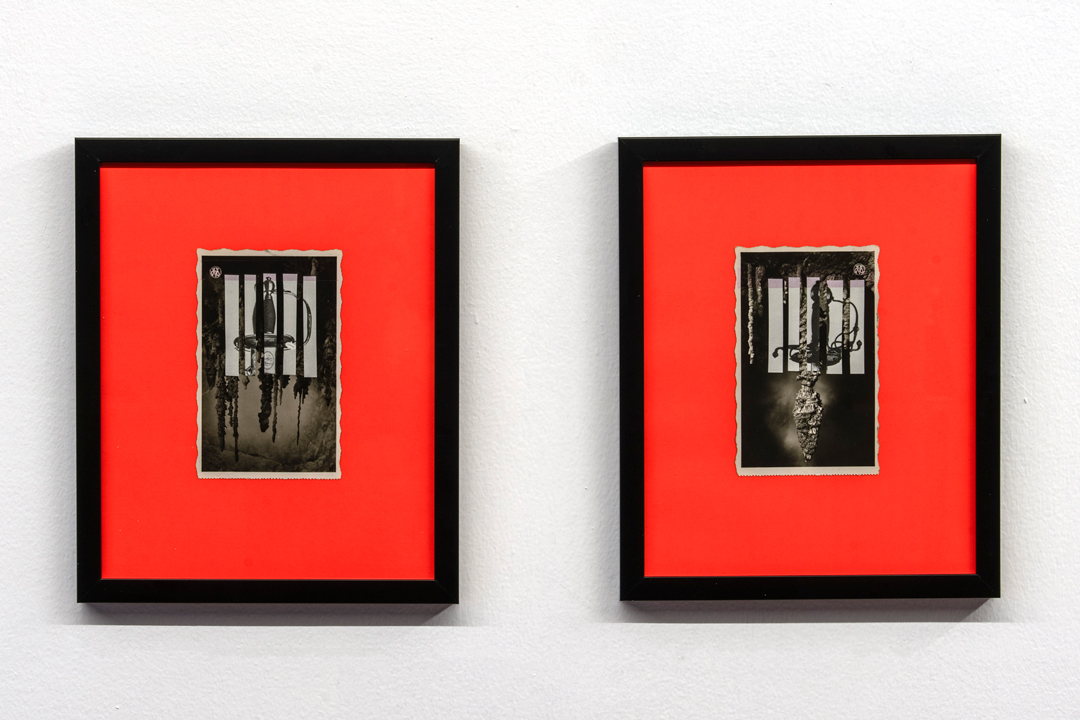
Alma Sarmiento. Espadas. Collage sobre papel. 2024.
Alma Sarmiento. Swords. Collage on paper. 2024.
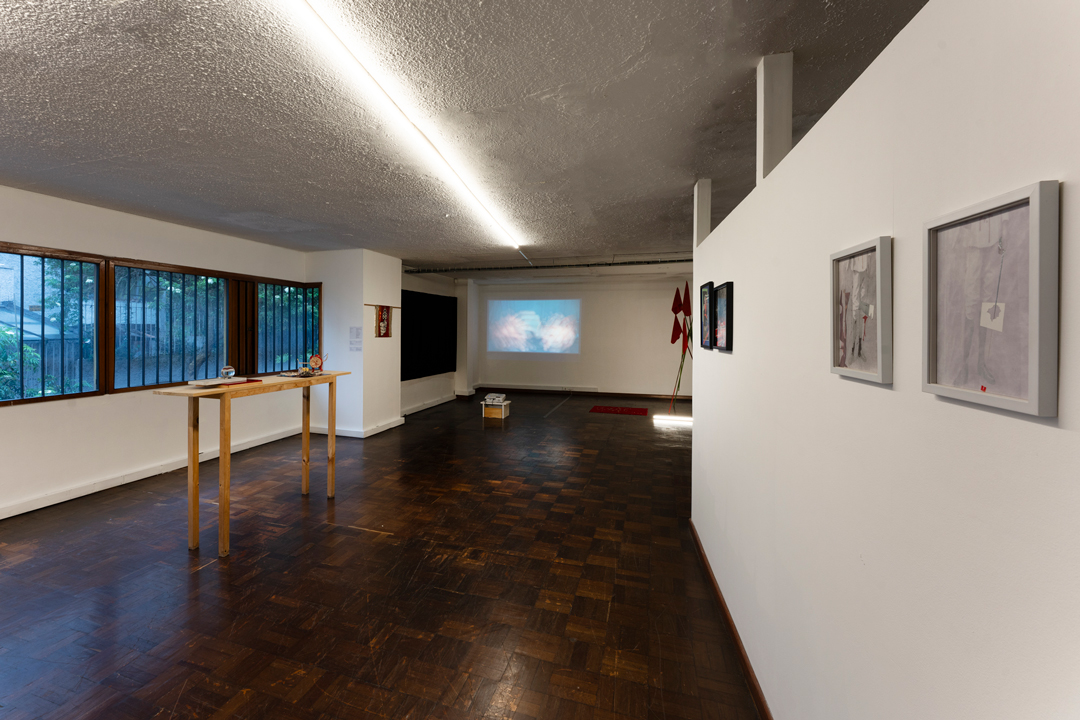
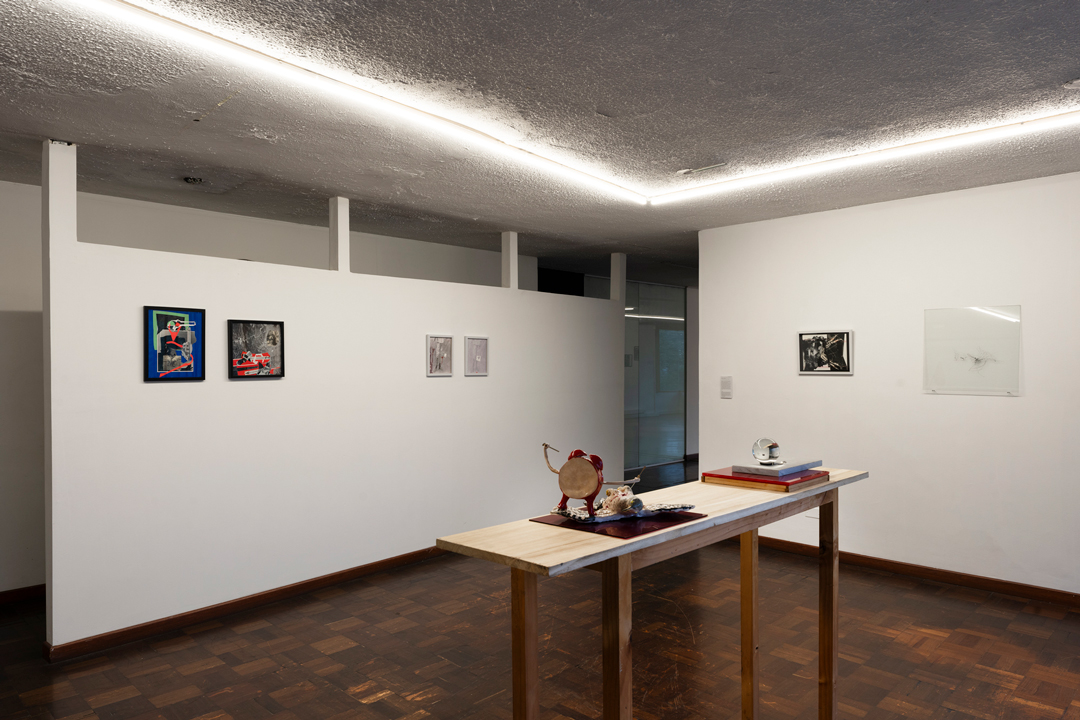
Vista general de la exposición. Sala 2.
General view of the exhibition. Room 2.
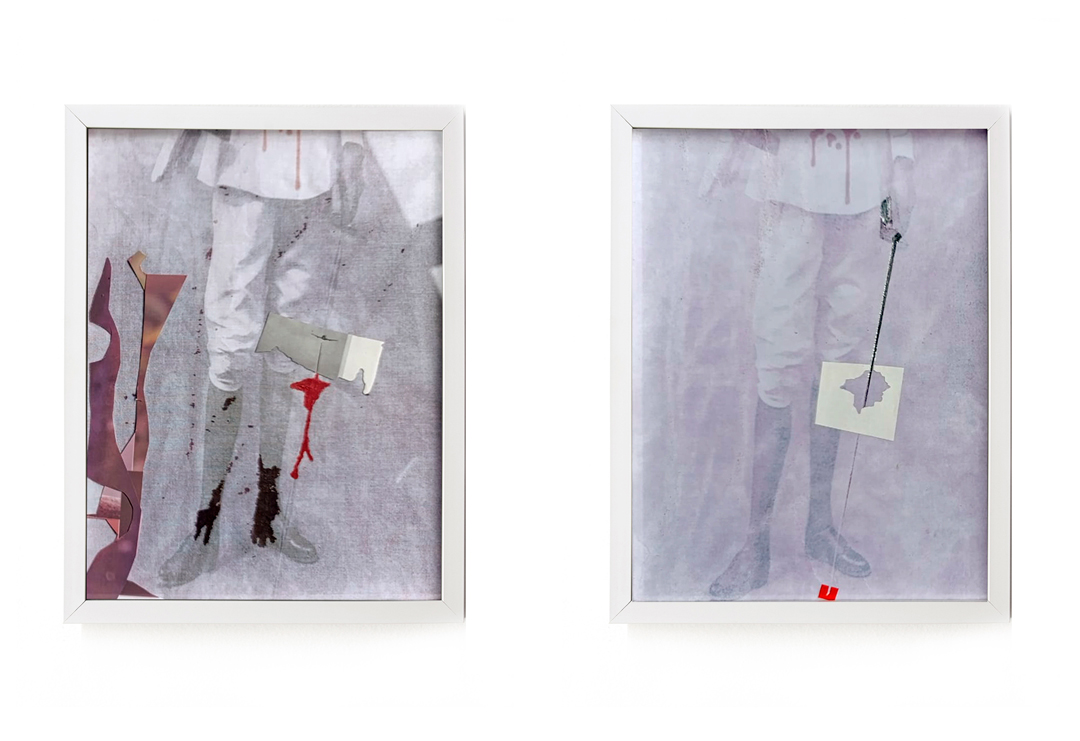
Lina González. Espadas. Collage sobre papel. 2024.
Lina González. Swords Collage on paper. 2024.
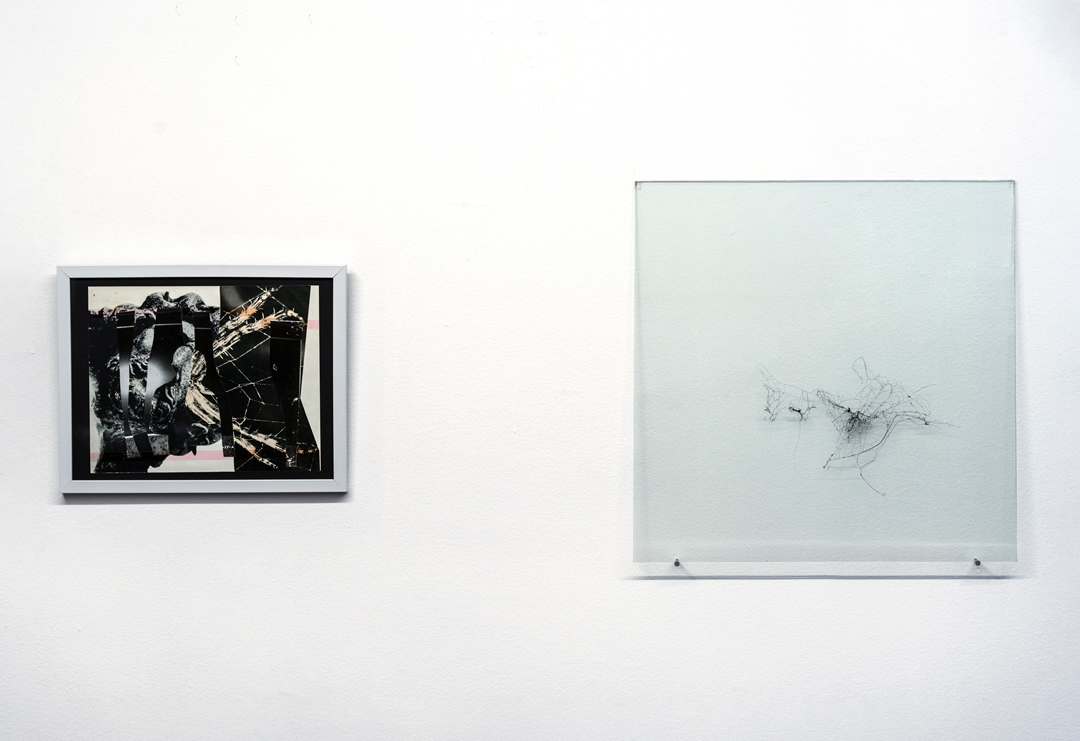
Alma Sarmiento (izq.). …en la mayor D959. Archivo nº324. Collage sobre papel. 2024.
Lina González (der.). Prejuicios. Dibujo en tela de araña. 2025.
Alma Sarmiento (left). …in A Major, D959. File No. 324. Collage on paper. 2024.
Lina González (right). Prejudices. Drawing on spiderweb. 2025.
20 agosto 2024
Baltasar, no es azar.
He conseguido mi espada
poco afilada
delgado dibujo,
como lo hace un brujo
y el burro resulta
arraigado tapujo
“Prejuicios”,
¿artificios, sacrificios?
El hombre a lomo del burro
trabajo o negocio,
“Tal vez ya son socios”
lina
August 20, 2024
Balthazar is not chance.
I have obtained my sword—
not very sharp—
a slender drawing,
like a sorcerer’s,
and the donkey turns out
a rooted disguise.
“Prejudices,”
artifices, sacrifices?
The man on the donkey’s back—
work or business,
“Perhaps they’re partners already.”
Lina
11 de septiembre 2024
Banda sonora 1: Schubert, Sonata # 20 en la mayor D959.
« Archivo nº324 (fondos de la asociación de las Ciencias
Cosmofónicas y Paralingüísticas)
Extracto del acta de la reunión para la creación de una nueva asociación distinta e independiente de la Asociación de Terolingüística1
Los miembros del comité científico se felicitaron en primer lugar por los inmensos progresos realizados hasta la fecha por la asociación de terolingüistas. Se evocaron especialmente aquellos progresos que fueron posibles gracias al descubrimiento de fragmentos de mensajes de hormigas encontrados (en forma de huellas de exudación de glándulas) en semillas de acacia cuidadosamente dispuestas. […] No haremos el reporte de todos los éxitos logrados. Solo mencionemos que el más hermoso fue sin duda el haberles reconocido a las arañas – reparando así una injusticia de larga data – la verdadera maternidad del método por excelencia de las ciencias históricas: la invención del archivo. Pues, en efecto, las arañas estuvieron realmente en el origen de este magnífico invento. Fue un gran descubrimiento en y para la historia. Las arañas fueron las primeras en desarrollar una tecnología de conservación de los acontecimientos, ya que las telas, incluso antes de ser trampas, asuntos arquitectónicos o territoriales, son la memoria material y exteriorizada de conductas, técnicas y estilos que forman sedosas cartografías de recuerdos en incesante evolución. No existe mejor manera de describir el archivo y atribuirles (por fin) a las arañas el origen de esta preciosa ciencia. Y gracias a este reconocimiento, las telarañas han entrado finalmente en la lista del Matrimonio Mundial de la Unesco2».
Alma
1“Glosario […]
Terolingüística (n.f.): el término “terolingüística” se acuñó a partir del griego thér [...], “bestia salvaje”. Se refiere a la rama de la lingüística que estudia y traduce las producciones escritas de los animales (y posteriormente de las plantas), ya sea en forma literaria de novela, poesía, epopeya, panfleto o incluso en forma de archivo... A medida que esta ciencia exploró el llamado mundo salvaje, aparecieron otras formas expresivas que fueron más allá de las categorías literarias humanas (y que entonces entraron en otro campo de especialización, el de las ciencias cosmofónicas y paralingüísticas). El término “terolingüista” se utilizó por primera vez en 1974, en un cuento de Ursula K. Le Guin, “The Author of the Acacia Seeds. And Other Extracts from the Journal of the Association of Therolinguiscs”.
2Vinciane Despret, Autobiografía de un pulpo y otros relatos de anticipación, p.16-17. Actes Sud, 2021.
August 1, 2024
Soundtrack 1: Schubert, Sonata No. 20 in A Major, D959.
“File No. 324 (archives of the Association for Cosmophonic and Paralinguistic Sciences)
Excerpt from the minutes of the meeting for the creation of a new association, distinct and independent from the Association of Therolinguistics
1
The members of the scientific committee first congratulated themselves on the immense progress achieved to date by the Association of Therolinguists. They particularly recalled the advances made possible by the discovery of fragments of ant messages found (in the form of exudation traces from glands) on carefully arranged acacia seeds. […] We will not report on all the successes obtained. Let us simply mention that the most beautiful achievement was undoubtedly the recognition granted to spiders—thus redressing a long-standing injustice—as the true mothers of the foremost method of the historical sciences: the invention of the archive. Indeed, spiders were truly at the origin of this magnificent invention. It was a great discovery in and for history. Spiders were the first to develop a technology for preserving events, since webs, even before being traps, architectural constructs, or territorial devices, are the material and externalized memory of behaviors, techniques, and styles—silken cartographies of recollection in ceaseless evolution. There is no better way to describe the archive than by finally attributing to spiders the origin of this precious science. And thanks to this recognition, spiderwebs have at last entered the UNESCO World Matrimony List2».
Alma
1Glossary […]
Therolinguistics (n.f.): the term “therolinguistics” was coined from the Greek thér […], meaning “wild beast.” It refers to the branch of linguistics that studies and translates the written productions of animals (and later of plants), whether in literary form—novel, poetry, epic, pamphlet—or even as archives... As this science explored the so-called wild world, other expressive forms emerged that went beyond human literary categories (and thus entered another field of specialization: that of cosmophonic and paralinguistic sciences). The term “therolinguist” was first used in 1974, in a short story by Ursula K. Le Guin, “The Author of the Acacia Seeds, and Other Extracts from the Journal of the Association of Therolinguists.”
2Vinciane Despret, Autobiography of an Octopus and Other Tales of Anticipation, pp. 16–17, Actes Sud, 2021.
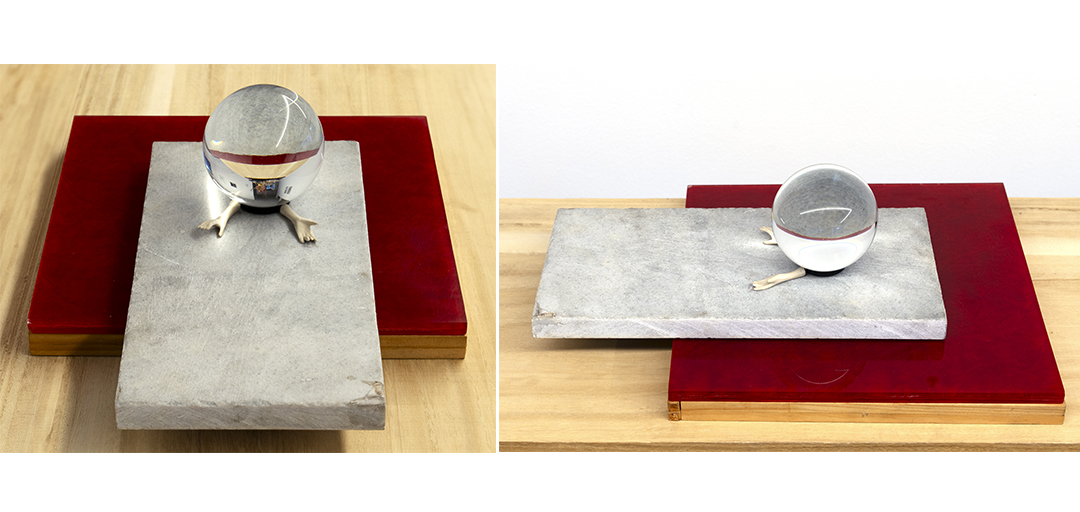
Lina González. Deceso. Escultura. 2024
Lina González. Death Notice. Sculpture. 2024
2 de octubre del 2024
Me declaro en muerte inmanente
la espada se clava suficiente en mi frente
sin pierna, sin brazo, ni frente,
no hay caso.
Envío el “Deceso”,
so peso
Mi último intento, estiro otro brazo
Y sale un balazo.
Sobre mármol yace el futuro
y su visionario fracaso.
lina
October 2, 2024
I declare myself in immanent death,
the sword drives deep enough into my forehead
Without leg, without arm, nor brow,
there is no case
I send the “Death Notice,”
I weigh it up
My final attempt, I stretch out another arm,
and a shot rings out
Upon marble lies the future
and its visionary failure
lina
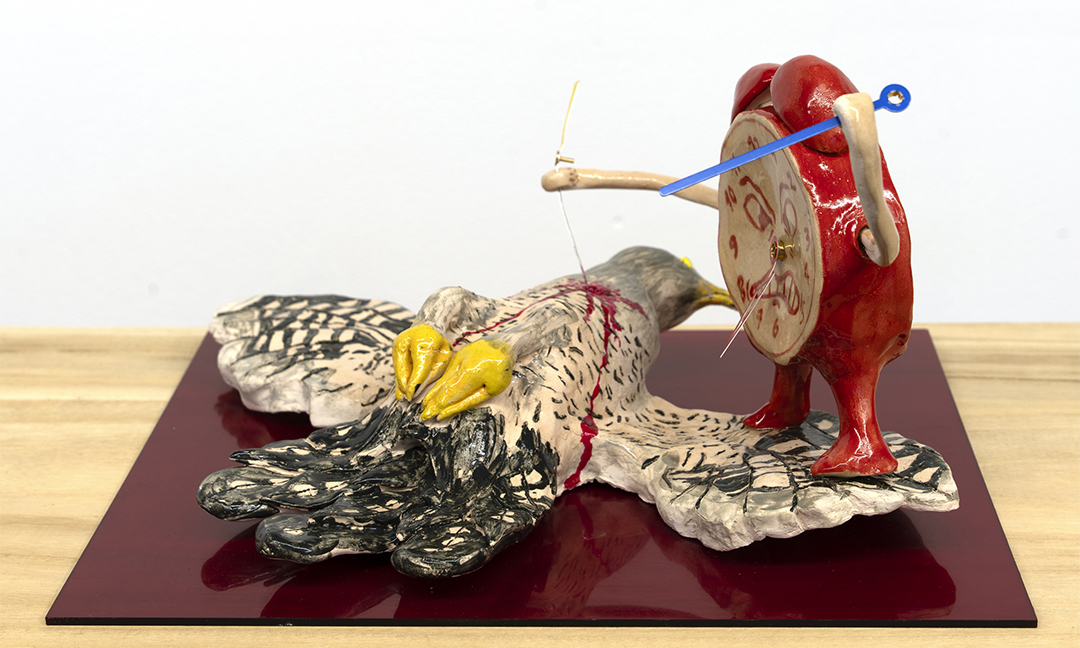
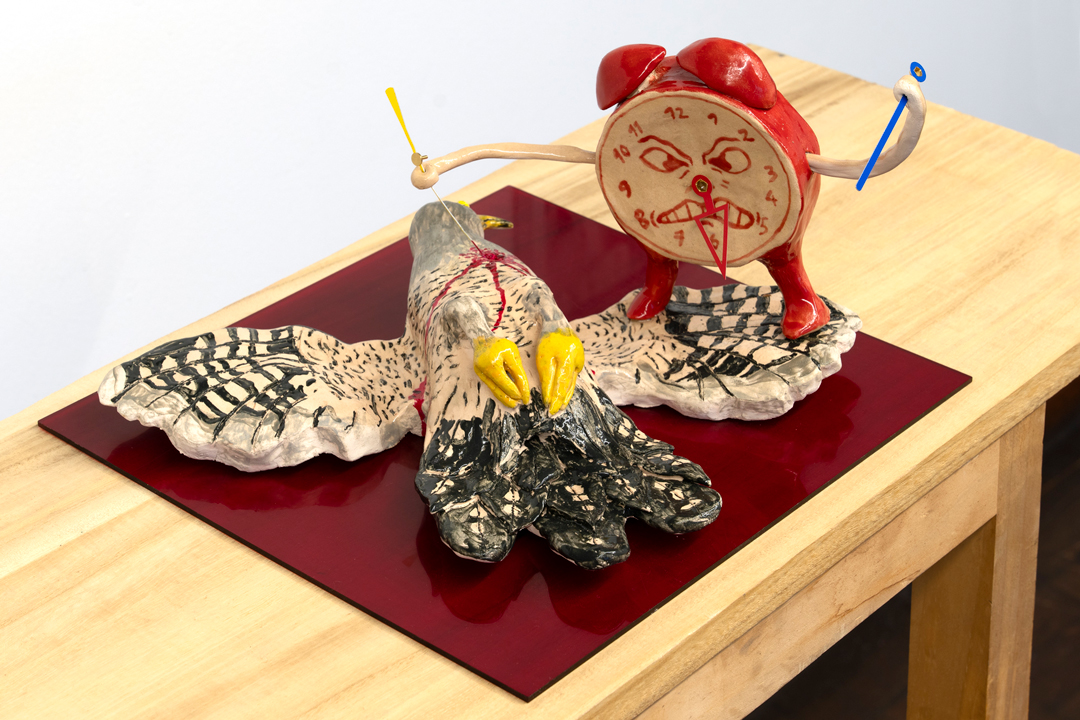
Alma Sarmiento. Los pájaros son lo contrario del tiempo. Cerámica esmaltada, agujas de reloj en plástico, esmalte de uñas. 2025.
Alma Sarmiento. Birds are the opposite of time. Glazed ceramics, plastic clock hands, nail polish. 2025.
2 de noviembre 2024
Lina,
En el espadaparqueadero se clavó mi espada. Usted se declaró muerta y yo ni me di cuenta.
Allá vi las manecillas de un reloj. Se estaban entrenando para matar a los pájaros.
Yo les dije que Los pájaros son lo contrario del tiempo y les recordé el poema de Juan Luis Martínez sobre el Lenguaje de los pájaros (1977):
“a. A través de su canto los pájaros
comunican una comunicación
en la que dicen que no dicen nada.
b. El lenguaje de los pájaros
es un lenguaje de signos transparentes
en busca de la transparencia dispersa de algún significado.
c. Los pájaros encierran el significado de su propio canto
en la malla de un lenguaje vacío;
malla que es a un tiempo transparente e irrompible.
d. Incluso el silencio que se produce entre cada canto
es también un eslabón de esa malla, un signo, un momento
del mensaje que la naturaleza se dice a sí misma.
e. Para la naturaleza no es el canto de los pájaros
ni su equivalente, la palabra humana, sino el silencio,
el que convertido en mensaje tiene por objeto
establecer, prolongar o interrumpir la comunicación
para verificar si el circuito funciona
y si realmente los pájaros se comunican entre ellos
a través de los oídos de los hombres
y sin que estos se den cuenta.
NOTA:
Los pájaros cantan en pajarístico,
pero los escuchamos en español.
(El español es una lengua opaca,
con un gran número de palabras fantasmas;
el pajarístico es una lengua transparente y sin palabras)”.
Duelo del duelo, no me consuelo.
Alma
November 2, 2024
Lina,
In the sword-parking lot, I drove in my sword. You declared yourself dead, and I didn’t even notice.
Over there I saw the hands of a clock. They were training to kill the birds.
I told them that birds are the opposite of time, and I reminded them of Juan Luis Martínez’s poem On the Language of Birds (1977):
a. Through their song, birds
communicate a communication
in which they say they say nothing.
b. The language of birds
is a language of transparent signs
in search of the dispersed transparency of some meaning.
c. Birds enclose the meaning of their own song
within the mesh of an empty language;
a mesh that is at once transparent and unbreakable.
d. Even the silence that occurs between each song
is also a link in that mesh, a sign, a moment
of the message nature tells itself.
e. For nature, it is not the birds’ song
nor its equivalent, human speech, but silence itself,
which, turned into a message, aims to
establish, prolong, or interrupt communication
to verify whether the circuit works
and whether birds truly communicate among themselves
through the ears of men
without their realizing it.
NOTE:
Birds sing in Birdish,
but we hear them in Spanish.
(Spanish is an opaque language,
with a large number of ghost words;
Birdish is a transparent and wordless language.)
Mourning for mourning, I find no consolation.
Alma.
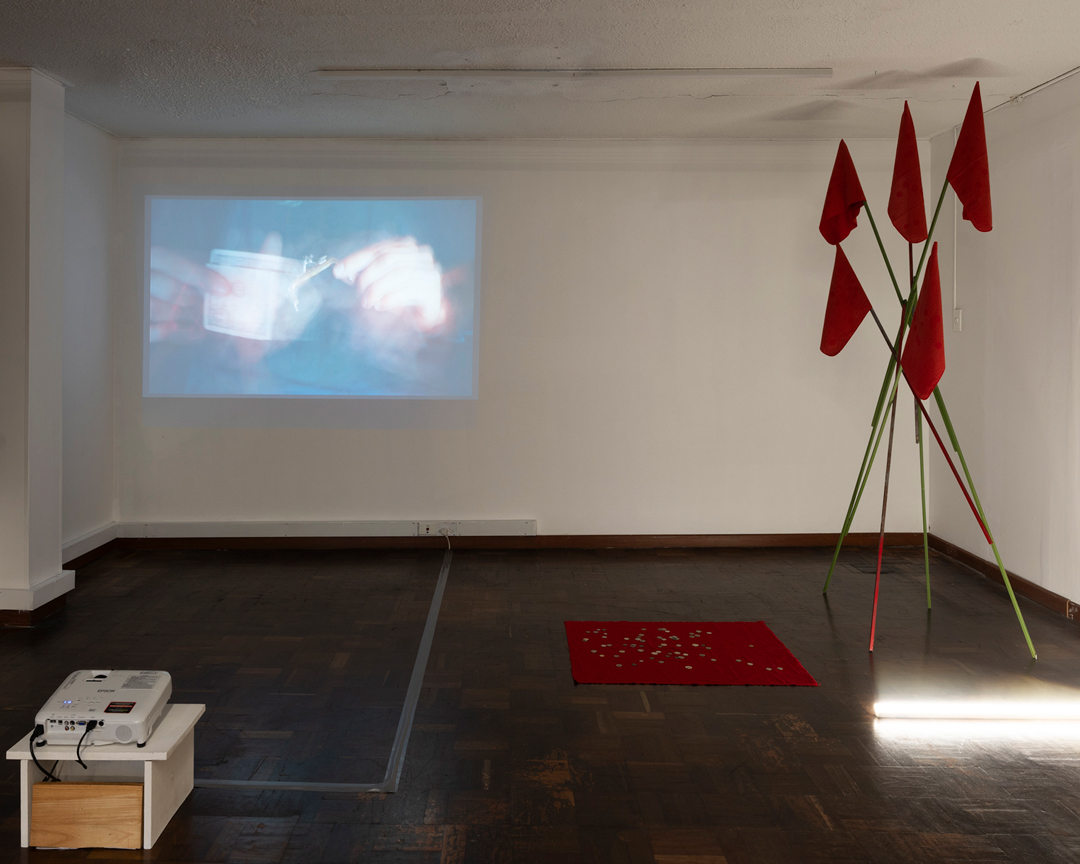
Lina González. Teorías económicas (y Banderas). Video. 2025
Lina González. Economic theories (and Flags). Video. 2025
5 de diciembre 2024
No se oye al fantasma
La aguja, asesina
el tiempo que canta
“teorías económicas”
que alucina el viento
No existe manera de recular al tiempo
No hay burro, ni mula, ni cucú cantante
Que comprenda su esclavitud entrante
lina
December 5, 2024
The ghost is not heard
The clock hand, kills
the singing time
“economic theories”
hallucinated by the wind
There is no way to back away from time
No donkey, no mule, no singing cuckoo
can grasp its coming enslavement
lina
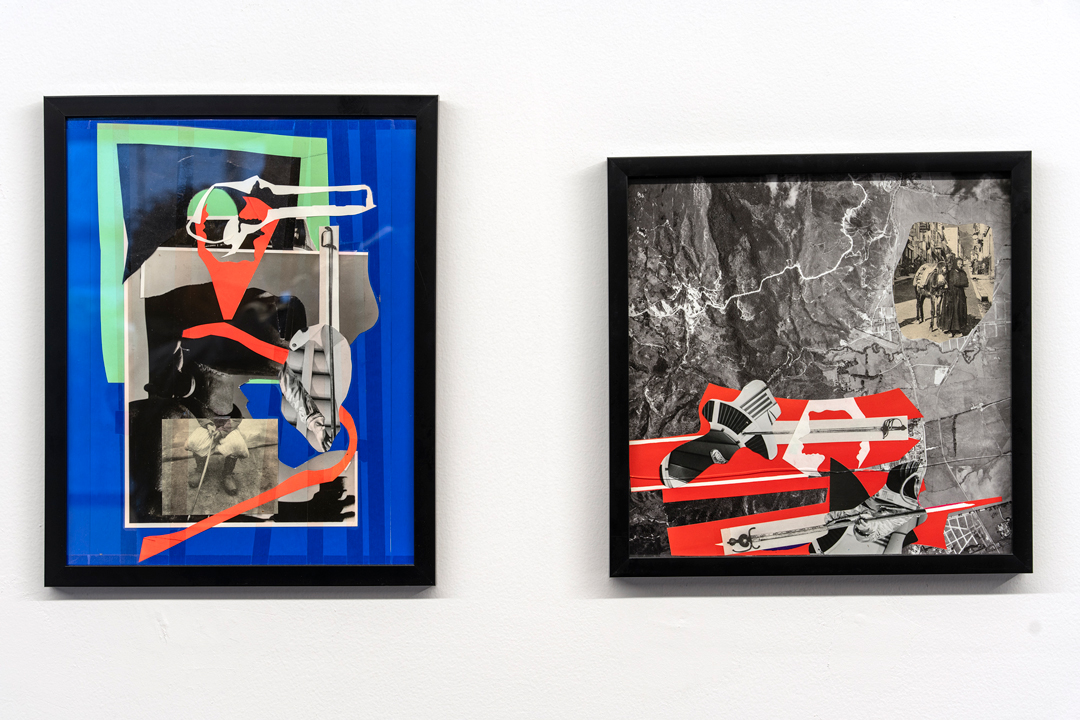
Alma Sarmiento. Sin título. Collages sobre papel. 2024.
Alma Sarmiento. Untitled. Collages on paper. 2024.
31 de diciembre 2024
Mis tijeras roznaron un silencio, ¿aceptación? No hay respuesta.
El silencio punzante que abre todas las posibilidades.
Alma
December 31, 2024
My scissors grazed a silence—acceptance? No answer.
The piercing silence that opens all possibilities.
Alma
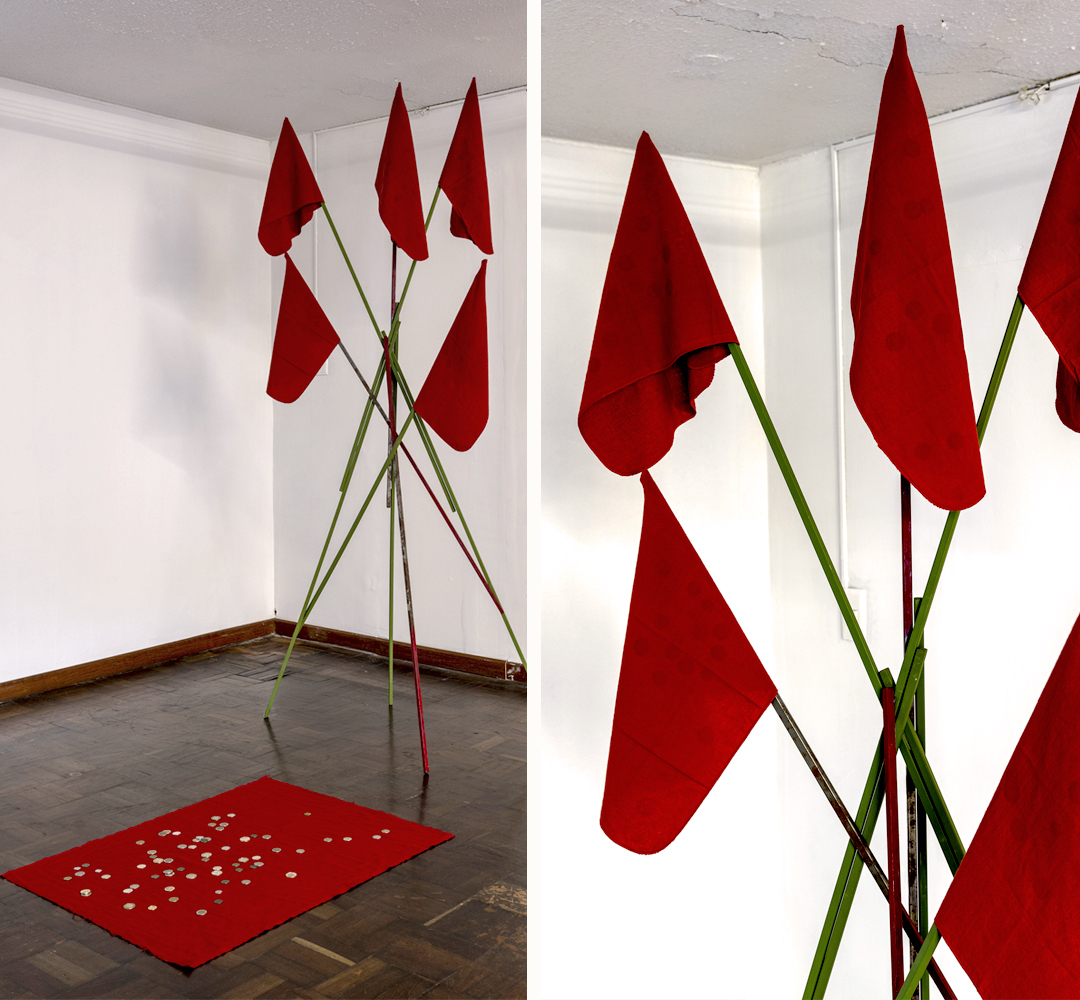
Lina González. Banderas. Escultura, sol sobre dulce abrigo y moneda corriente, técnicas mixtas. 2025.
Lina González. Flags. Sculpture, sun on soft shelter and common currency, mixed media. 2025.
1 de febrero 2025
Ha pasado el tiempo
Ha llegado el momento
Alzo las “Banderas”,
Mujer, burro, mula, araña o cebra
Filósofo, caballero, periodista, o relojero
Cada cual, con su dinero, su poder y su miseria
[lina]
February 1, 2025
Time has passed
The moment has come
I raise the “Flags,”
Woman, donkey, mule, spider, or zebra
Philosopher, knight, journalist, or watchmaker
Each with their money, their power, and their misery
[lina]
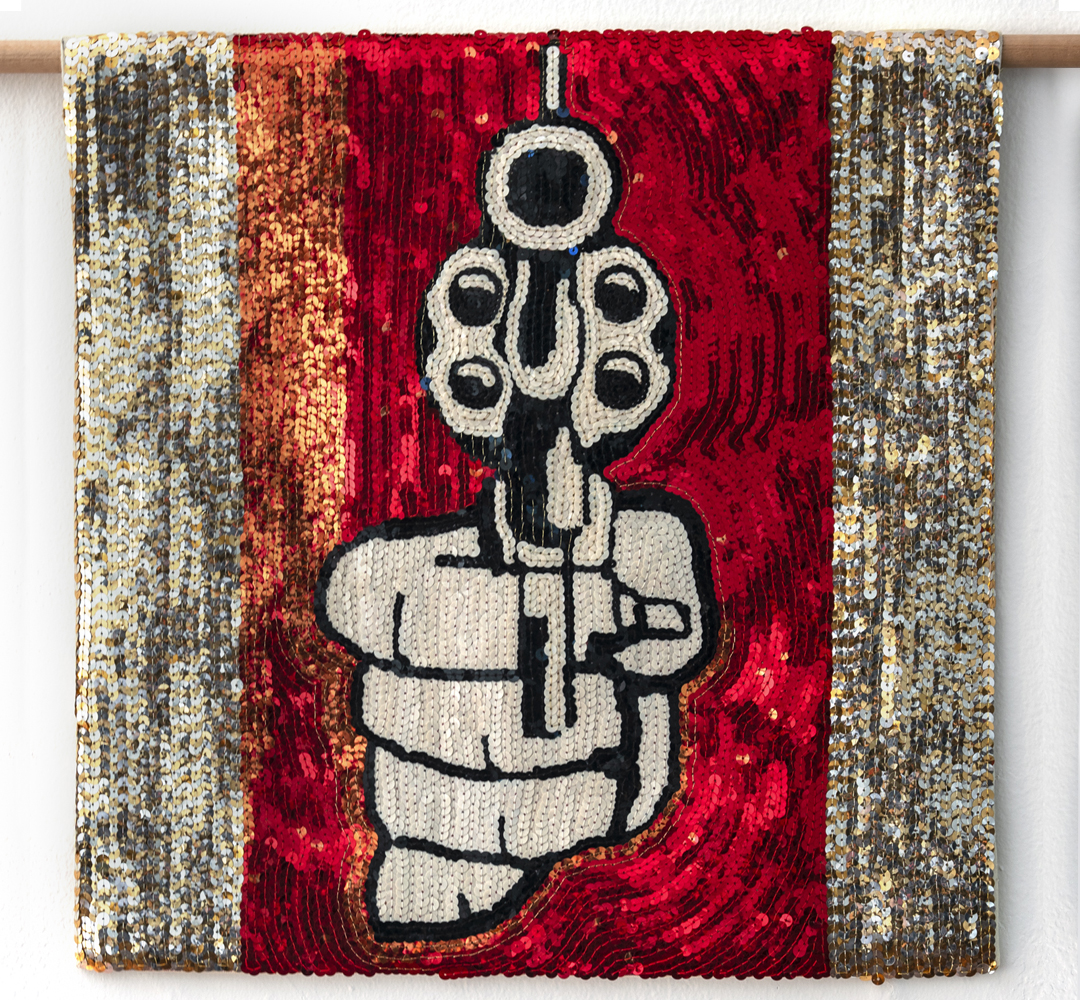
Alma Sarmiento. Comer luz. Bordado en lentejuelas (reproducción del cuadro Pistol, 1964, de Roy Lichtenstein). Iniciado en 1999 y terminado en 2025.
Alma Sarmiento. Eat light. Sequin embroidery (reproduction of the painting Pistol, 1964, by Roy Lichtenstein). Initiated in 1999 and completed in 2025.
7 de febrero 2025
Sonrisa del silencio.
“Me llama desde el futuro para volver” y “Comer luz”, dijo un pulpo hacia 2072.
“Los griegos cuentan que Ariadna le ofreció un hilo a Teseo. Gracias a ese hilo, Teseo logró orientarse en el laberinto, encontró al Minotauro y lo mató. En cuanto a las huellas que Teseo dejó al vagar por el laberinto, el mito no dice nada.
Lo que mantiene unidos los capítulos de este libro [de este duelo], dedicados a temas heterogéneos, es la relación entre el hilo —el hilo del relato, que nos ayuda a orientarnos en el laberinto de la realidad— y las huellas” (Carlo Ginzburg).
Alma
Februray 7, 2025
Smile of silence.
“He calls me from the future to return” and “Eat light,” said an octopus toward the year 2072.
“The Greeks tell that Ariadne offered Theseus a thread. Thanks to that thread, Theseus was able to find his way through the labyrinth, found the Minotaur, and killed it. As for the traces Theseus left while wandering through the labyrinth, the myth says nothing.
What holds together the chapters of this book [of this duel], devoted to heterogeneous subjects, is the relationship between the thread —the thread of the narrative, which helps us find our way through the labyrinth of reality— and the traces ”(Carlo Ginzburg).
Alma